
10 Best Captive Portal Tools for Guest WiFi
In Brief: This guide compares captive portal tools for guest WiFi based on access control, branding, authentication, analytics, monetization, hardware compatibility, and multi-location management. The best platform depends on the organization’s security requirements, operating model, existing network hardware, and commercial goals.
A guest WiFi login page is not just a technical checkpoint. For a hotel, restaurant group, airport, or managed service provider, it can control access, capture consent, accept payments, collect customer feedback, and protect the production network. The best captive portal tools turn that moment of connection into a managed business process rather than an unmanaged bandwidth expense.
The right platform depends on what happens after the guest connects. A single cafe may need a branded splash page and simple time limits. A hospital needs privacy-conscious access policies. A multi-property hotel operator may need centralized administration, PMS integration, paid plans, and reporting across hundreds of locations. Start with those outcomes, then evaluate the platform architecture behind them.
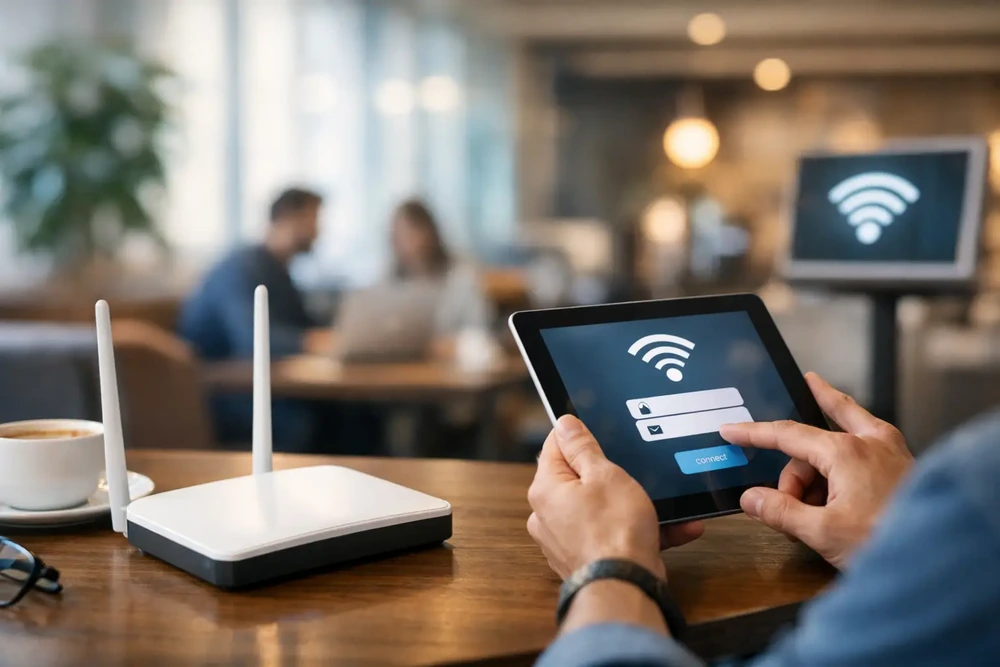
What separates the best captive portal tools
A captive portal should work reliably on the hardware already deployed or on the network stack you plan to standardize. Compatibility matters, but it is only the first test. The stronger platforms combine portal design, authentication, policy enforcement, analytics, and multi-site administration without forcing IT teams to build separate workflows for each function.
For commercial guest WiFi, assess five areas: access control, branding and conversion, monetization, operational scale, and deployment control. The balance changes by venue. A venue with high foot traffic may prioritize fast social or SMS login and advertising. An enterprise campus may give priority to RADIUS, identity integration, audit trails, and segmented access. A service provider needs tenant management and white-label capabilities.
10 best captive portal tools to evaluate
The tools below are not a universal ranking. They represent different approaches to guest access, from cloud-managed marketing platforms to enterprise network access control systems. The best choice is the one that fits your hardware, security requirements, operating model, and revenue goals.
1. Antamedia Enterprise WiFi System
Antamedia Enterprise WiFi system is designed for organizations that want guest WiFi to support both network operations and commercial outcomes. The platform brings branded captive portals, guest authentication, social WiFi, payments, surveys, video advertising, analytics, and centralized administration into one environment.
It is a strong fit for hospitality, retail, public venues, education, transit, and managed WiFi providers that need cloud or on-premise deployment options. Features such as vouchers, bandwidth policies, session limits, RADIUS AAA, virtual controller capabilities, and white-label options make it practical for simple single-site deployments as well as larger distributed networks. It is especially relevant when monetization, customer data collection, and marketing campaigns are requirements alongside secure guest access.
2. Cisco Identity Services Engine
Cisco Identity Services Engine, commonly called ISE, is an enterprise-focused network access control platform. Its captive portal functions are part of a broader identity and policy system that can manage wired, wireless, and VPN access.
Cisco ISE is best suited to organizations with complex security requirements, established Cisco infrastructure, and experienced network teams. It can provide detailed role-based policies, certificate workflows, device profiling, and integration with enterprise identity sources. The trade-off is cost and operational complexity. It is usually more platform than a restaurant group or independent hotel needs for guest WiFi alone.
3. Aruba ClearPass
Aruba ClearPass is another enterprise-grade access control platform with guest onboarding and captive portal capabilities. It is frequently considered by large organizations that need strong policy enforcement across mixed device populations and network environments.
ClearPass can support sponsored access, self-registration, directory integration, and granular user roles. It is a logical option for healthcare systems, universities, corporate campuses, and public-sector deployments where policy and visibility outweigh marketing features. Organizations should confirm how much portal customization and campaign functionality they need, since a security-first platform may require additional tools to run WiFi marketing programs.
4. Cloud4Wi
Cloud4Wi focuses on customer engagement through guest WiFi. It is built for brands that want to collect first-party data, manage consent, and activate customer journeys across physical locations.
This platform is well suited to retail, restaurants, and hospitality brands with established marketing teams and customer data platforms. It can be a good choice when the portal is primarily a digital engagement channel. Buyers should review its network hardware support, authentication options, and operational controls alongside its marketing capabilities, particularly when managing complex guest policies or paid access plans.
5. Purple WiFi
Purple WiFi is known for guest WiFi analytics, visitor engagement, and location-based marketing use cases. It targets venues that want insight into visitor behavior while offering branded internet access.
It can fit retail environments, leisure venues, and hospitality operators that value data capture, surveys, and customer communications. The most useful evaluation question is whether its commercial analytics functions align with your privacy, consent, and data retention requirements. WiFi data is valuable only when the organization has a clear plan to use it responsibly.
6. IronWiFi
IronWiFi provides cloud-based captive portal and guest WiFi management with broad network hardware support. Its model is attractive for organizations that want to add a portal layer without replacing every access point or controller.
It is worth evaluating for multi-vendor environments, smaller IT teams, and deployments that need social login, vouchers, payment options, or external authentication. As with any cloud portal service, validate the required policy controls, local failover behavior, and support for the access points already in use before standardizing across locations.
7. Tanaza
Tanaza offers cloud management for WiFi networks with captive portal functionality and compatibility across selected third-party hardware. It is often considered by network operators looking to centrally manage distributed wireless infrastructure.
The platform can make sense for service providers, franchises, and multi-site organizations that want a cloud-managed approach without being tied to one hardware manufacturer. Its value depends heavily on the specific access point models and management features required. Confirm support for your hardware generation, firmware, and authentication design during the proof of concept.
8. WatchGuard Cloud Wi-Fi
WatchGuard Cloud Wi-Fi combines wireless management with security-oriented network controls. It is a natural fit for organizations already using WatchGuard security products or managed service providers that support them.
Guest portals, policy configuration, and centralized visibility can simplify operations for small and mid-sized businesses. It may be less suitable where advanced WiFi marketing, advertising, or highly customized paid-access workflows are central to the business model. Security integration is a strength, but commercial engagement requirements should be assessed separately.
9. UniFi Network
UniFi Network includes captive portal features within the broader Ubiquiti ecosystem. It is popular with small businesses, independent venues, and operators seeking relatively affordable centralized management for UniFi hardware.
For basic guest policies, vouchers, access schedules, and branded login pages, it can be an efficient choice. The limitation is that it works best when the network is standardized on UniFi equipment, and advanced identity, billing, marketing automation, and enterprise AAA needs may require external services or a more specialized platform.
10. Meraki Splash Page and Identity Options
Cisco Meraki provides cloud-managed wireless with splash page and authentication options built into its dashboard. For businesses already standardized on Meraki, this can reduce the number of systems IT must manage.
Meraki is useful for straightforward guest access policies, click-through terms, sponsored logins, and integrations with selected identity providers. It is often a practical infrastructure choice for distributed enterprises. However, operators seeking deep portal customization, WiFi advertising, detailed data capture workflows, or independent hardware flexibility may find a dedicated captive portal platform more aligned with their needs.
How to choose without creating a support burden
Do not select a platform based only on the appearance of the splash page. Run a proof of concept using real access points, real guest devices, and the actual authentication methods you expect to offer. Test iOS and Android captive portal behavior, voucher redemption, payment flow, session expiration, roaming, bandwidth rules, and what happens if an upstream service becomes unavailable.
For multi-location deployments, centralized administration should be non-negotiable. IT teams need to create policies once, apply them by location or venue type, and verify compliance through reporting. Operators also need delegated access: a property manager may need to create guest vouchers, while corporate IT retains control of portal templates, security policies, and network-wide settings.
Commercial requirements deserve equal attention. If you plan to collect emails, phone numbers, survey responses, or social login data, define the consent language, retention rules, and CRM or marketing workflow before launch. If WiFi will be paid, test the complete transaction path and establish who handles refunds, receipts, taxes, and guest support.
The most effective captive portal is the one guests barely have to think about and operators can confidently control. Build the access journey around your venue's real service model, then choose the platform that can scale that experience without turning every new location into a new network project.
Prefer Antamedia on Google
Get practical guest WiFi and network management insights directly from Antamedia.