
Hotel WiFi Conversions That Drive Revenue
In Brief
Hotel WiFi conversions turn guest connectivity into measurable business outcomes such as direct bookings, restaurant and spa engagement, premium WiFi sales, loyalty signups, and feedback. The most effective approach keeps WiFi access simple, presents relevant offers at the right stage of the guest journey, and measures results from portal interaction through to revenue or engagement.
A guest who joins your WiFi has already made a useful choice: they have engaged with your property on a personal device, often while planning the next step in their stay. Hotel wifi conversions turn that moment into measurable business value, whether the goal is more direct bookings, restaurant covers, spa appointments, paid premium access, loyalty enrollments, or better guest feedback.
The opportunity is not in forcing every guest through a long form. It is in building a branded access journey that respects the guest’s time while giving hotel operators, marketers, and IT teams control over what happens next. A captive portal should operate as both a reliable access layer and a commercial channel.
Why Hotel WiFi Conversions Matter
Hotel WiFi is often treated as a utility cost: provision bandwidth, isolate guest traffic, resolve support tickets, and move on. That approach overlooks a high-intent digital touchpoint. Guests connect from rooms, lobbies, meeting spaces, pools, and restaurants. Each connection can reveal consented preferences, visit patterns, language selection, and the services a guest may value.
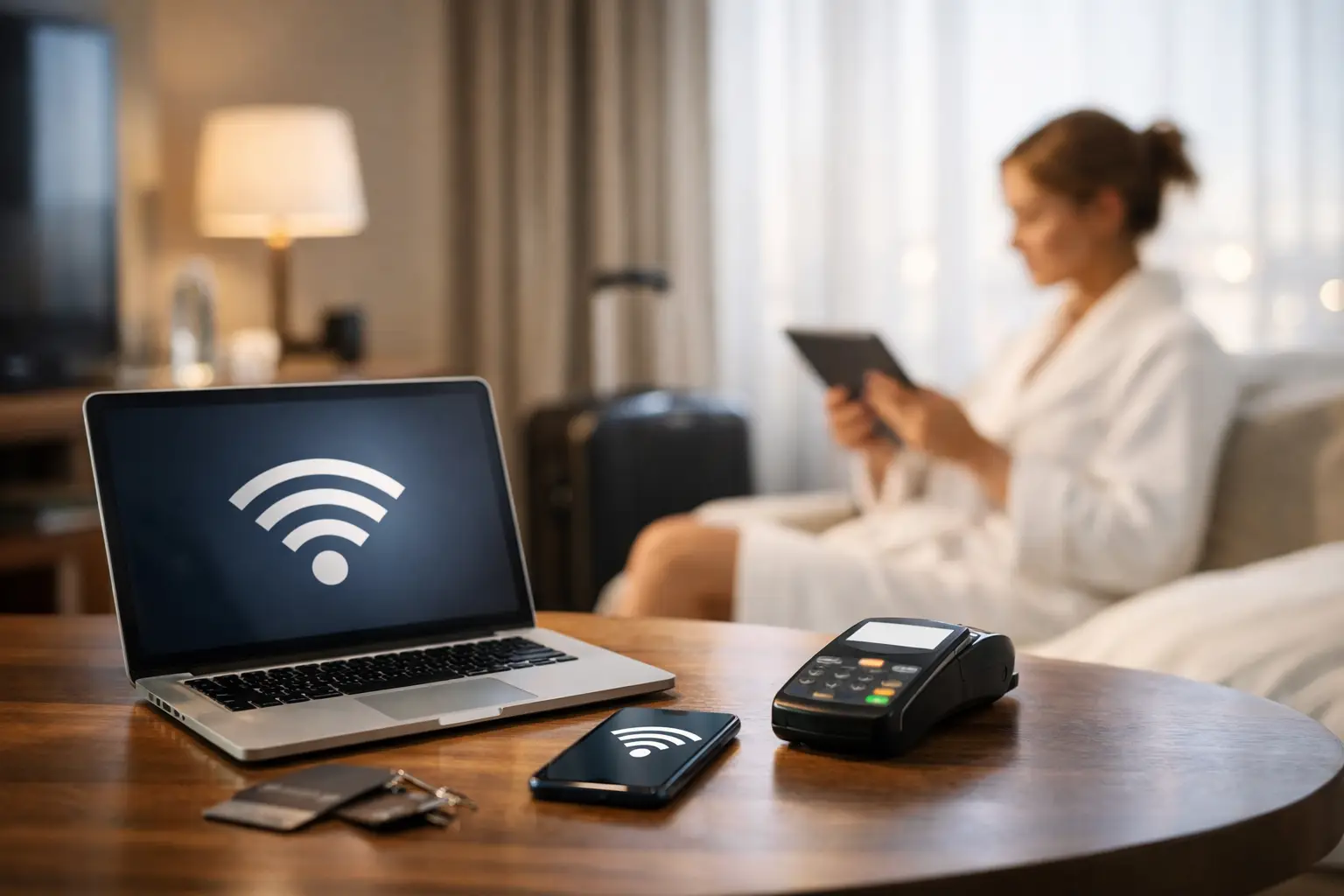
Effective hotel guest WiFi management combines reliable access with authentication, analytics, commercial opportunities, and a consistent guest experience.
For independent hotels and hotel groups, this matters because third-party booking channels can limit direct guest relationships. A well-designed WiFi journey gives the property a first-party engagement channel during the stay and a permission-based path for communication after checkout. For resorts and full-service hotels, it can also direct traffic toward underused amenities at the moments guests are most likely to act.
Conversion goals should differ by property type. A limited-service airport hotel may prioritize loyalty signups and repeat direct bookings. A resort may prioritize dining reservations, paid upgrades, and activities. A conference hotel may use event-specific access pages to promote sponsor messages or meeting services. The network can support each model, but the portal experience should not be identical across all locations.
Build a Conversion Path, Not Just a Login Page
The strongest hotel WiFi portal asks for the smallest reasonable commitment before providing access. Requiring too much information at the door can reduce connection rates, generate inaccurate data, and frustrate guests who simply need to check email or join a video call.
A practical flow starts with a recognizable hotel brand, a concise explanation of access terms, and one or two clear sign-in choices. Returning guests should have a faster path where permitted. New guests can choose email, SMS, social sign-in, voucher access, room-based credentials, or paid access depending on the property’s operating model.
Match the Access Method to the Guest Journey
Room number and surname authentication can work well when it is integrated with a PMS integrated WiFi and the hotel wants to validate in-house guests. It supports a more personalized experience, but it introduces integration requirements and must be designed carefully to avoid exposing reservation details.
Email or SMS sign-in is usually simpler for public areas, restaurants, and independent venue traffic. It can support consent collection and follow-up campaigns, but operators should expect some guests to use secondary addresses or decline marketing permission. That is not a failure. Access should remain available under an appropriate privacy policy, while promotional communication remains optional.
Paid access has a place when the hotel serves non-guests, requires high-bandwidth packages, or offers premium service tiers. The payment screen must be transparent about price, duration, bandwidth expectations, device limits, and refund terms. A confusing payment flow produces chargebacks and front-desk calls rather than revenue.
Keep One Primary Action on Screen
The portal should not compete with itself. If the immediate objective is access, the primary action is connect. If the objective is a restaurant offer, present it after authorization or on the successful-login page, where it does not block connectivity.
Avoid placing multiple promotions, surveys, loyalty messages, and upsell banners on the same first screen. Guests interpret this as friction. A better approach is to sequence messages: access first, a relevant offer second, feedback later in the stay or after checkout.
Convert Attention Into Relevant Offers
A hotel WiFi system can deliver offers based on location, time, device behavior, access method, and guest segment. The value comes from relevance, not volume.
A guest connecting from the lobby on Friday afternoon may see an early check-in upgrade or café offer. A guest joining from the pool area may receive a food and beverage promotion. A conference attendee can receive event information, meeting-room guidance, or sponsor content. A guest who has used the network over several stays may be a strong candidate for a direct-booking offer on a future visit.
The best offers are operationally available. There is little value in promoting a fully booked spa, a restaurant that is closed, or a room upgrade inventory the front desk cannot fulfill. Marketing and operations need a shared process for setting offer rules, time windows, inventory limits, and escalation paths.
Video advertising can be effective in certain guest journeys, particularly for sponsored WiFi or venue partnerships, but it needs restraint. Short, skippable, well-targeted placements protect the guest experience. Mandatory or repetitive video content can lower satisfaction and lead guests to use mobile data instead.
Measure Hotel WiFi Conversions Beyond Login Counts
Login volume is a network usage metric, not a conversion metric. Hotel teams need to connect portal activity to commercial outcomes.
Start with a defined event for each campaign. For a restaurant promotion, that may be a reservation, redeemed code, or point-of-sale transaction. For direct booking, it may be a tracked booking request or confirmed reservation from a post-stay campaign. For a survey, it may be a completed response with a score high enough to identify potential advocates or low enough to trigger service recovery.
WiFi analytics should separate the full conversion funnel: portal views, authentication starts, completed connections, consent captures, offer impressions, clicks, redemptions, and revenue. Segment the data by property, location within the property, access type, campaign, and guest status. A lobby campaign may perform very differently from an in-room campaign even when both use the same creative.
Attribution requires discipline. If a guest receives a spa offer and books two days later at the front desk, the conversion may not automatically appear in WiFi reporting. Use codes, booking fields, campaign identifiers, or integrated systems where possible. When direct attribution is unavailable, compare controlled campaign periods rather than assigning every sale to the portal.
Protect the Network and the Guest Relationship
Commercial goals cannot come at the expense of network security. Guest WiFi should use proper client isolation, bandwidth controls, content and policy controls where appropriate, and segmentation from hotel operations, payment systems, staff networks, and Internet of Things devices.
Centralized administration is especially valuable for multi-property operators. It allows IT teams to apply access policies, portal templates, bandwidth packages, and reporting standards across locations while permitting approved local promotions. This reduces configuration drift and gives regional operators a consistent operating model.
Privacy practices are equally central. Collect only data that supports a stated business purpose. Present consent language clearly, retain data according to policy, and give guests a practical way to manage marketing preferences. Regulations differ by location and guest origin, so legal and compliance teams should review the data model before a campaign launches.
A platform such as Start Hotspot can combine captive portal control, guest access management, analytics, surveys, advertising, and payment acceptance in one administration layer. The key is not adding every feature at once. It is selecting the capabilities that support a defined commercial and operational objective.
Run a Controlled Rollout
Start with one property or one guest segment, then establish a baseline before making major changes. Measure connection completion rate, help-desk contacts, consent rate, offer engagement, redemption, and guest satisfaction. A portal that raises email capture but doubles access complaints is not producing a healthy conversion program.
Test one variable at a time. Compare an offer placed after login with the same offer on the landing page. Test concise copy against a more detailed value statement. Evaluate whether a room-authenticated experience produces better upgrade revenue than a simple email flow. The answer depends on the property, guest mix, and integration maturity.
Your WiFi portal should earn its place in the guest journey. When access is reliable, permissions are clear, and offers solve a real guest need, the network becomes more than an amenity. It becomes a controlled channel for serving guests better and proving revenue impact.
Frequently Asked Questions
What is a hotel WiFi conversion?
A hotel WiFi conversion occurs when a guest interaction with the WiFi journey produces a defined business outcome, such as a direct booking, restaurant reservation, spa appointment, premium WiFi purchase, loyalty signup, survey response, or promotional engagement.
Should hotels require guest data before providing WiFi access?
Hotels should collect only the information needed for a clear purpose and keep marketing permissions transparent and separate where required. Asking for too much information before access can increase abandonment and reduce the quality of collected data.
When should hotels show promotional offers on the WiFi portal?
Internet access should normally remain the primary action. Promotional offers are often more effective after authentication or on the successful-login page, where they can support the guest journey without creating unnecessary login friction.
How should hotels measure WiFi conversion performance?
Track the full journey from portal views and completed connections to consent, offer engagement, redemptions, bookings, and revenue. Results should also be compared by property, location, guest segment, campaign, and access method where possible.